
Celo has successfully completed its historic migration to an Ethereum layer 2 network, concluding a nearly two-year journey that transforms the mobile-first blockchain platform into a scaling solution for the Ethereum ecosystem. The transition, which finalized on March 25, 2025, represents one of the most significant blockchain migrations to date and marks Celo’s return to the Ethereum ecosystem as an optimistic rollup.
A Two-Year Journey Home
The migration process began in July 2023 when the Celo community first proposed transitioning from its independent Layer 1 blockchain to an Ethereum Layer 2 solution. After extensive community discussion and a competitive selection process, Optimism’s OP Stack was chosen as the technology foundation for Celo’s new architecture.
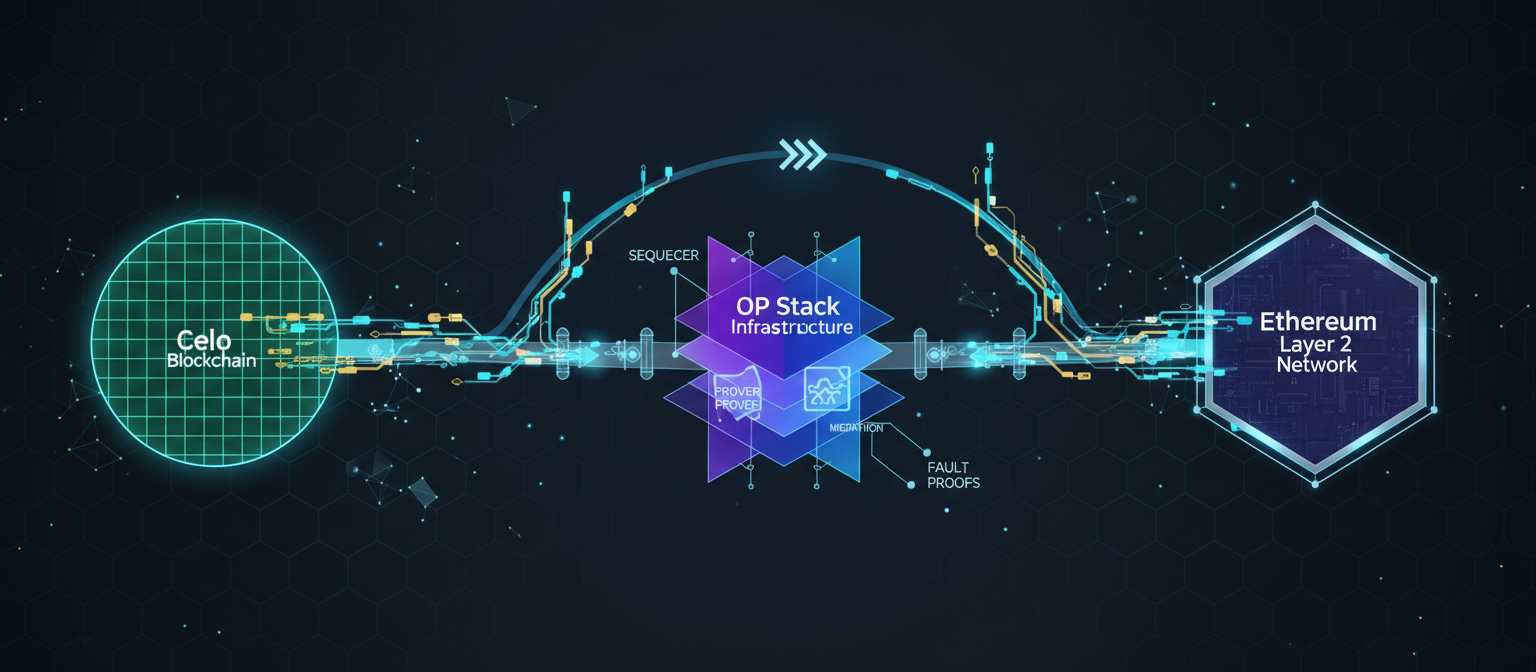
The culmination of this effort came today as Celo successfully completed the technical migration, with the network transitioning from its original Layer 1 to the new Ethereum Layer 2 infrastructure. The upgrade involved a hard fork at block height 31,056,500, temporarily pausing block production on the original Celo network before activating the new Layer 2 system.
Technical Transformation Details
The migration to Ethereum Layer 2 brings several significant technical improvements to the Celo ecosystem:
Enhanced Performance: Block times have been reduced dramatically from 5 seconds to just 1 second, significantly improving the user experience and transaction throughput for applications built on Celo.
Ethereum Integration: The transition enables native bridging with Ethereum, facilitating seamless asset transfers and liquidity exchange between the Celo ecosystem and the broader Ethereum network.
Cost Efficiency: Despite the enhanced performance, Celo maintains its characteristic low transaction fees of approximately $0.0005, making it accessible for users in emerging markets and mobile-first applications.
Security Enhancements: By leveraging Ethereum’s security model through the OP Stack, Celo benefits from the robust security infrastructure of the world’s largest smart contract platform.
Strategic Rationale Behind the Migration
Celo’s decision to migrate to Ethereum Layer 2 reflects broader trends in the blockchain industry toward interoperability and shared infrastructure. Rene Reinsberg, Celo co-founder, emphasized that the move aligns with the platform’s mission to foster global prosperity through a robust on-chain economy.
“We’re returning home to Ethereum while maintaining the unique characteristics that made Celo successful,” Reinsberg stated in a community announcement. “This migration allows us to leverage Ethereum’s security and liquidity while preserving our focus on mobile-first accessibility and emerging market inclusion.”
The strategic move also positions Celo to benefit from the growing network effects of Ethereum’s Layer 2 ecosystem, which has seen rapid adoption and development throughout 2024 and early 2025.
Impact on the Celo Ecosystem
The migration affects more than 1,000 projects built on Celo, spanning decentralized finance, payments, and social impact applications. Early reports from ecosystem developers indicate that the transition has been smooth, with most applications experiencing minimal disruption.
Major Celo-based protocols, including decentralized exchanges, lending platforms, and mobile payment applications, have confirmed successful operations on the new Layer 2 infrastructure. The preserved network history ensures that existing user data and application states remain intact throughout the migration.
Market Response and Community Reception
The cryptocurrency market has responded positively to Celo’s successful migration, with the CELO token maintaining stability at approximately $0.38, representing a 21% increase over the previous two weeks. Trading volumes have remained robust, indicating strong community support for the transition.
Ethereum co-founder Vitalik Buterin publicly praised Celo’s efforts, noting that the platform’s focus on mobile accessibility and emerging markets aligns well with Ethereum’s vision of global blockchain adoption. The endorsement from Ethereum’s leadership highlights the strategic importance of successful Layer 2 migrations for the broader ecosystem.
Technical Architecture and Implementation
Celo’s Layer 2 implementation utilizes Optimism’s OP Stack, a modular blockchain development framework that enables rapid deployment of Ethereum-compatible Layer 2 solutions. The OP Stack provides standardized components for consensus, data availability, and execution layers, allowing projects like Celo to focus on their specific use cases while benefiting from shared infrastructure.
The migration process involved careful coordination between Celo Labs, the Optimism Collective, and various infrastructure providers. Technical teams worked to ensure that the transition would be seamless for end users, with most users requiring no action to continue using their applications and assets.
Future Roadmap and Development Plans
With the Layer 2 migration complete, Celo’s development team has outlined an ambitious roadmap for the coming months. Key priorities include:
Enhanced Cross-Chain Compatibility: Development of improved bridging solutions to facilitate seamless interaction with other Ethereum Layer 2 networks and external blockchains.
Developer Tool Expansion: Introduction of new developer tools and frameworks specifically designed for building mobile-first applications on Ethereum Layer 2 infrastructure.
Ecosystem Growth: Accelerated efforts to attract new projects and developers to the Celo ecosystem, leveraging the enhanced capabilities of the Layer 2 architecture.
Institutional Partnerships: Expansion of partnerships with financial institutions and payment processors interested in leveraging Celo’s mobile-first approach for real-world applications.
Implications for the Broader Blockchain Industry
Celo’s successful migration sets an important precedent for other independent blockchains considering transitions to Layer 2 solutions. The project demonstrates that technical migration is feasible at scale and that the benefits of shared infrastructure can outweigh the advantages of complete independence.
Industry analysts predict that Celo’s move may inspire other projects to explore similar transitions, potentially accelerating the consolidation of blockchain activity around major ecosystems like Ethereum while preserving the unique value propositions of specialized platforms.
Looking Ahead: A New Chapter for Celo
Today marks the beginning of a new chapter for Celo as an Ethereum Layer 2 solution. The platform’s focus on mobile accessibility, emerging markets, and social impact applications remains unchanged, but these efforts are now supported by the enhanced security, liquidity, and network effects of the Ethereum ecosystem.
As the blockchain industry continues to evolve toward greater interoperability and specialization, Celo’s migration to Ethereum Layer 2 represents both a technical achievement and a strategic milestone. The project’s success demonstrates the growing maturity of Layer 2 technology and the increasing sophistication of blockchain migration processes.
For users, developers, and ecosystem participants, the transition promises enhanced performance, reduced costs, and greater access to the broader Ethereum ecosystem without sacrificing the unique characteristics that made Celo valuable in the first place.
This article reflects information available as of March 25, 2025, and does not include subsequent developments or technical updates.