
Ethereum is gearing up for another major upgrade, and according to global asset manager VanEck, the upcoming Fusaka upgrade scheduled for December 2025 could fundamentally transform how the network handles scaling and transaction costs.
What Is Fusaka?
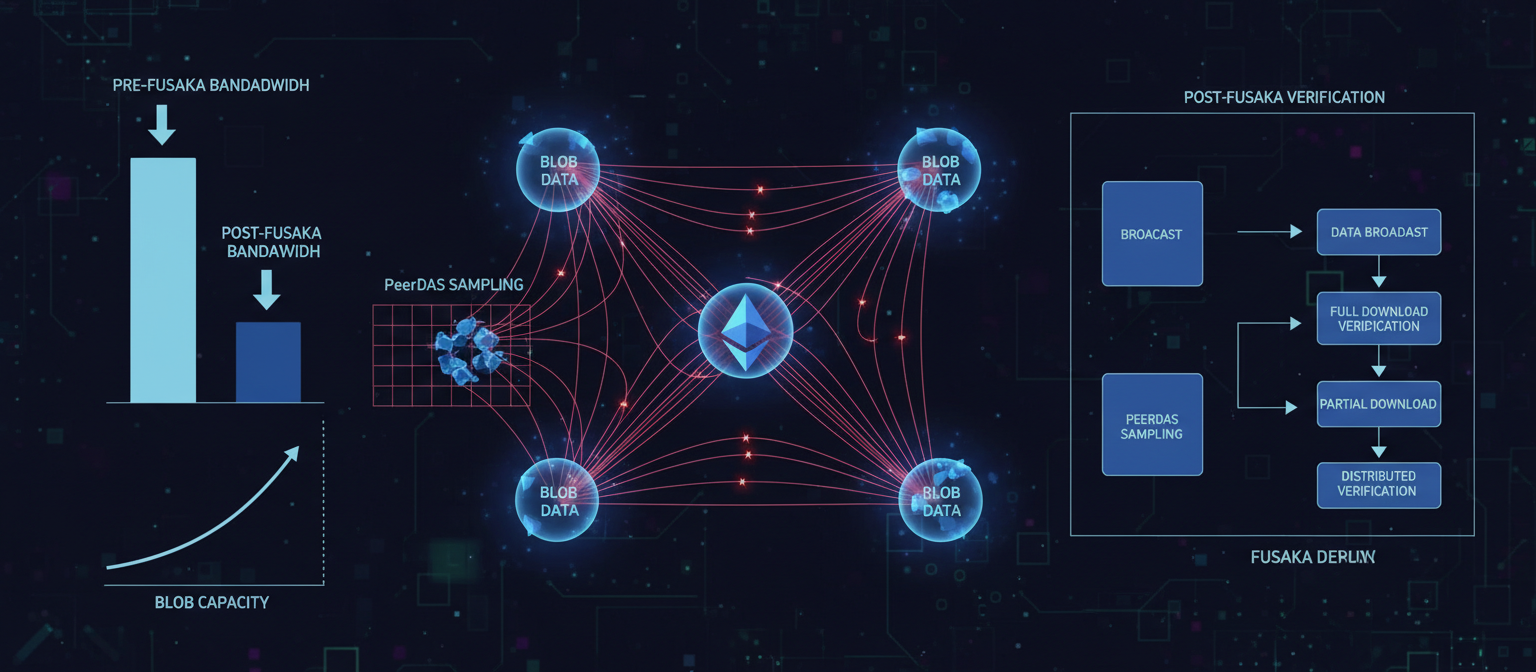
The Fusaka upgrade introduces a critical new feature called Peer Data Availability Sampling (PeerDAS). This technical enhancement allows validators to verify blocks by sampling smaller pieces of data rather than downloading entire datasets. While that might sound like a minor optimization, the implications are far-reaching.
Slashing Costs for Rollups
The primary benefit of Fusaka centers on Ethereum’s “blob” capacity—the data storage mechanism that layer-2 rollups use to post transaction data back to the mainnet. By increasing blob capacity and reducing bandwidth requirements for validators, Fusaka directly addresses one of the biggest bottlenecks in Ethereum’s scaling strategy.
VanEck analysts note that this upgrade will make it “easier for layer-2 blockchains to scale by easing the data burden on validators.” In practical terms, this means lower transaction costs for end users as more activity migrates to rollup solutions like Arbitrum, Optimism, and zkSync.
A Shift in Ethereum’s Role
Interestingly, VanEck’s analysis highlights an evolving narrative for Ethereum. While mainnet fee revenue has been declining as activity shifts to layer-2 solutions, the network’s role as a security and settlement layer is becoming more crucial. Fusaka reinforces this transition by optimizing Ethereum’s infrastructure to better support the rollup-centric roadmap.
According to VanEck, these improvements strengthen ETH’s position as a “monetary asset” by cementing its role as the foundational security layer for an expanding ecosystem of layer-2 networks.
What This Means for Users and Developers
For everyday users, Fusaka promises:
- Lower transaction fees as rollups can operate more efficiently
- Faster transaction finality through improved data availability
- Better scalability without compromising decentralization
For developers building on layer-2 solutions, the upgrade means:
- Reduced costs for posting data to Ethereum mainnet
- Increased throughput potential for their applications
- Improved user experience that can compete with centralized alternatives
Looking Ahead
The Fusaka upgrade represents another step in Ethereum’s multi-year roadmap to become the global settlement layer for decentralized applications. By prioritizing efficiency and accessibility for layer-2 networks, Ethereum is positioning itself not as a direct competitor to high-throughput layer-1 chains, but as the secure foundation upon which an entire ecosystem of scalable solutions can thrive.
With institutional players like VanEck publicly endorsing the upgrade’s significance, December’s Fusaka activation could mark a pivotal moment in Ethereum’s evolution from a general-purpose blockchain to the internet’s settlement layer.