
Solana co-founder Anatoly Yakovenko has issued an urgent warning to the Bitcoin community, stating that the world’s largest cryptocurrency faces a critical security threat from quantum computing that could materialize as early as 2030. His stark assessment has reignited debate about Bitcoin’s long-term security and the need for proactive measures to protect against quantum attacks.
The Quantum Threat Timeline
Yakovenko’s assessment is particularly alarming given his technical expertise and leadership role in one of the cryptocurrency industry’s most innovative projects. He estimates there’s a “50/50” chance that quantum computers could possess the capability to break Bitcoin’s cryptographic protections within the next five years, potentially compromising the security of the entire network.
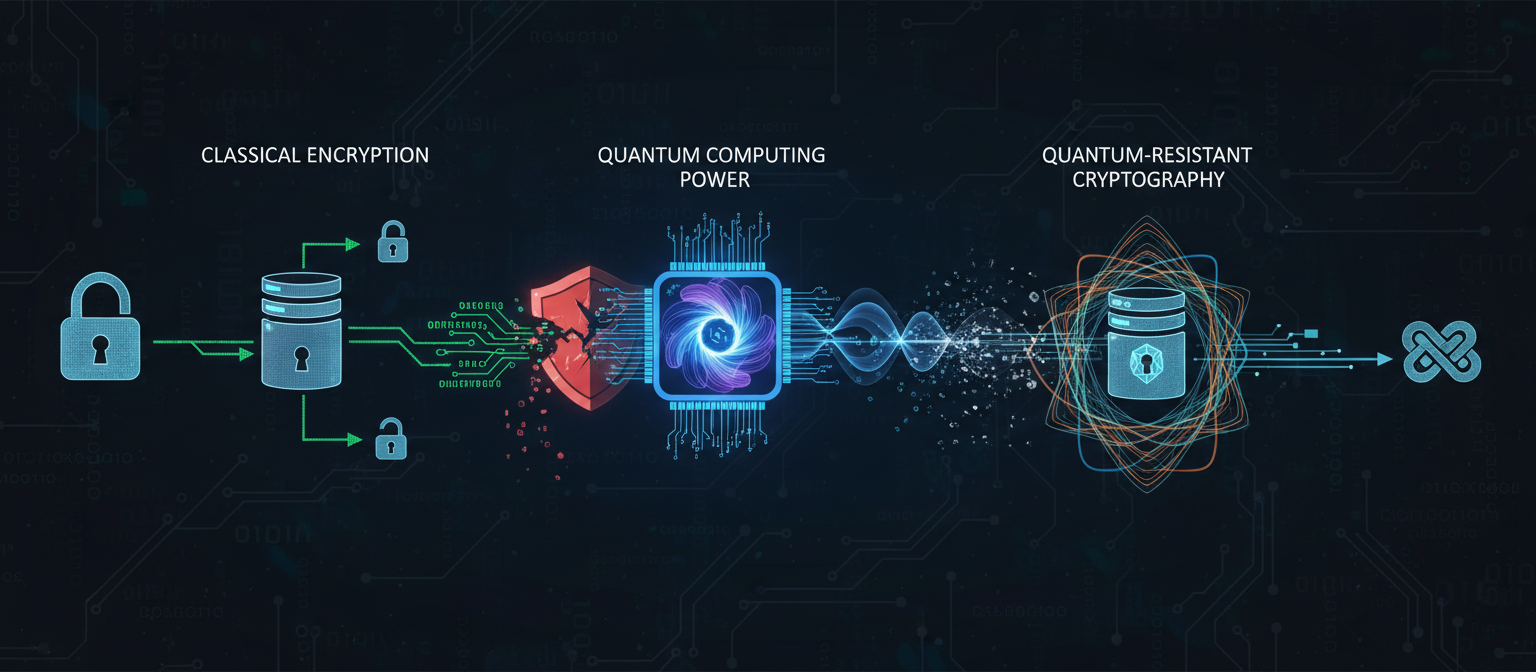
The specific vulnerability lies in Bitcoin’s use of the Elliptic Curve Digital Signature Algorithm (ECDSA), which is the cryptographic standard that secures Bitcoin transactions and wallet addresses. While ECDSA is considered secure against classical computers, quantum computers running Shor’s algorithm could theoretically break this encryption, allowing attackers to steal funds from any Bitcoin address.
The Technical Challenge
Bitcoin’s security model relies on the assumption that certain mathematical problems are computationally infeasible to solve with classical computers. Specifically, Bitcoin uses public-key cryptography where users generate a private key and derive a corresponding public key. The security of this system depends on the difficulty of deriving the private key from the public key.
Quantum computers, however, could potentially solve this problem exponentially faster than classical computers using quantum algorithms. If a sufficiently powerful quantum computer were developed, it could break the encryption protecting Bitcoin addresses, allowing attackers to access funds without needing the corresponding private keys.
Proposed Solution: Quantum-Resistant Migration
Yakovenko’s proposed solution involves migrating Bitcoin to a quantum-resistant signature scheme, a process that would require significant technical coordination and community consensus. The migration would likely involve a hard fork, which would create a new version of Bitcoin that supports quantum-resistant cryptography while maintaining compatibility with existing addresses.
This transition would be complex and technically challenging, requiring careful planning to ensure that users’ funds remain secure throughout the process. The cryptocurrency community would need to agree on specific quantum-resistant algorithms, implement them across the network, and coordinate the migration in a way that minimizes disruption.
Industry Reaction and Debate
The cryptocurrency community’s reaction to Yakovenko’s warning has been mixed. Some experts, including notable figures like Adam Back and Peter Todd, have expressed skepticism about the immediacy of the quantum threat, suggesting that practical quantum computers capable of breaking Bitcoin’s encryption are still many years away.
However, others argue that the threat is more imminent than many realize and that proactive preparation is essential. They point to rapid advances in quantum computing research and the increasing investment in quantum technologies by both governments and private companies as evidence that the threat timeline may be shorter than commonly assumed.
Quantum Computing Development Status
Current quantum computers are still in early stages of development, with existing systems having limited qubit counts and high error rates. However, research in this area is advancing rapidly, with major breakthroughs occurring regularly in quantum hardware, error correction, and algorithm development.
Several companies, including Google, IBM, and various startups, are working to build more powerful quantum computers. Governments worldwide are also investing heavily in quantum research, recognizing the technology’s potential to revolutionize fields from medicine to cryptography.
Impact on Bitcoin’s Value Proposition
If quantum computing does pose a significant threat to Bitcoin’s security in the near term, it could have profound implications for Bitcoin’s value proposition as a store of value and medium of exchange. Security is one of Bitcoin’s most fundamental properties, and any perceived vulnerability could undermine confidence in the network.
However, Bitcoin’s open-source nature and active development community mean that solutions could be implemented if the threat becomes more concrete. The cryptocurrency has proven resilient to previous challenges, and the community has historically demonstrated the ability to coordinate on technical upgrades when necessary.
Broader Cryptocurrency Implications
The quantum threat extends beyond Bitcoin to affect virtually all cryptocurrencies that use similar cryptographic approaches. Ethereum, Solana, and other major blockchain platforms would also need to transition to quantum-resistant cryptography if the threat materializes.
This challenge could actually present an opportunity for the cryptocurrency industry to lead in developing quantum-resistant solutions. The open and collaborative nature of blockchain development could accelerate the adoption of quantum-resistant technologies across the broader digital ecosystem.
Timeline for Preparation
Given the complexity of migrating a global, decentralized network like Bitcoin to new cryptographic standards, many experts argue that preparation should begin well before quantum computers become capable of breaking existing encryption. The migration process could take years of planning, testing, and coordination.
Some projects in the cryptocurrency space have already begun working on quantum-resistant solutions. Several blockchain platforms are experimenting with post-quantum cryptographic algorithms, and research is ongoing into how to implement these technologies in practical, scalable ways.
What This Means for Bitcoin Holders
For individual Bitcoin holders, the quantum threat highlights the importance of staying informed about technological developments and being prepared to update security practices as new solutions become available. While the immediate risk may be low, the long-term security of Bitcoin holdings could depend on the successful implementation of quantum-resistant technologies.
Bitcoin users should also be aware that different types of addresses may have different levels of vulnerability. Addresses that have never been used (where the public key has not been revealed) may be more secure than reused addresses, though both would eventually need to transition to quantum-resistant formats.
Conclusion: A Call for Preparation
Yakovenko’s warning serves as a reminder that even the most established technologies face ongoing security challenges in a rapidly evolving technological landscape. Whether the quantum threat materializes in five years or twenty, the cryptocurrency community would be well-served by beginning to prepare for this transition now.
The coming years will be crucial for determining whether the cryptocurrency industry can successfully navigate this challenge. By starting the conversation and developing solutions now, the community can ensure that Bitcoin and other cryptocurrencies remain secure and viable long into the quantum era.
This article reflects information available as of September 20, 2025. Quantum computing research is ongoing, and timelines for practical quantum capabilities remain uncertain.